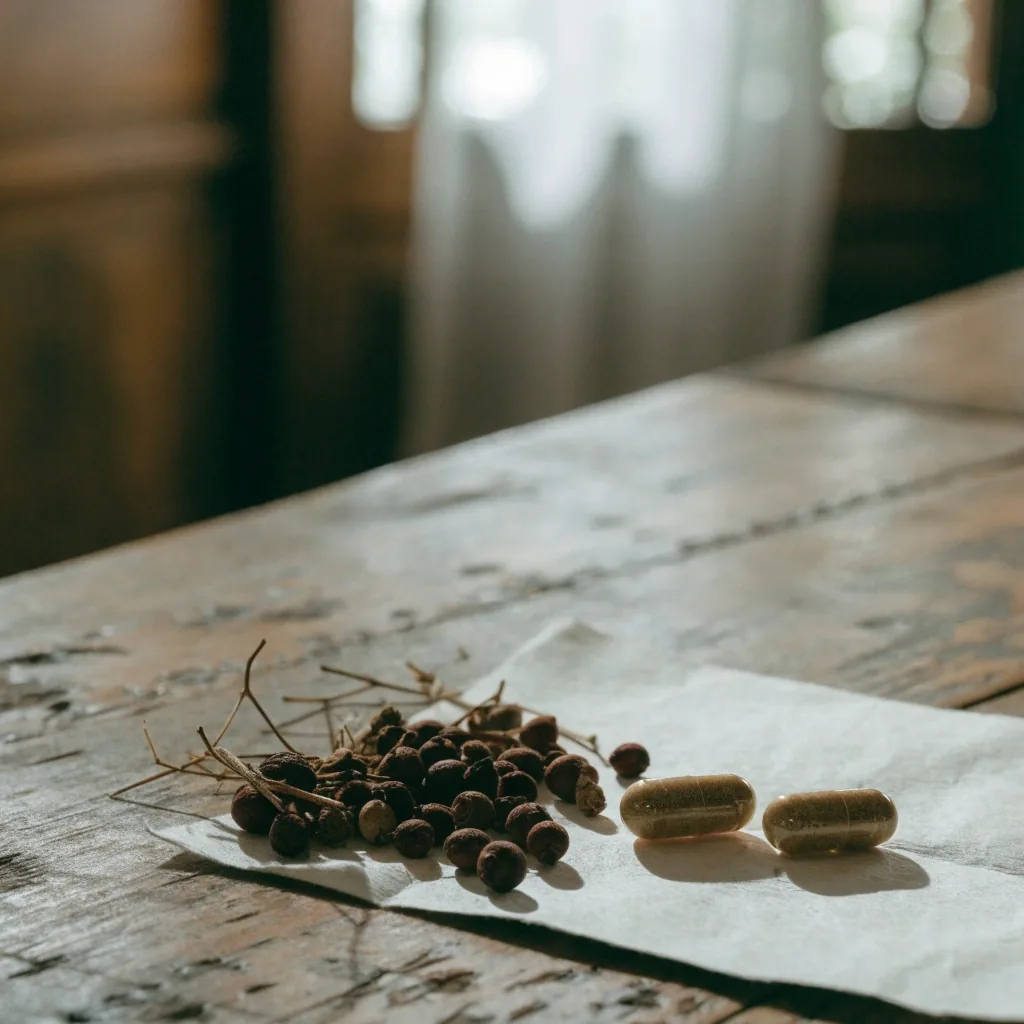
Saw palmetto
Common in Indonesian listings as part of a botanical complex rather than on its own. When it leads a panel, you are usually looking at a plant-extract formula, not a general daily vitamin.
 HerbalPria
Compare formulas by ingredient and choose what fits your daily routine.
Buying GuideVisit & enquire
Jl. Ahmad Yani No. 88, Ilir Timur I, Palembang, Sumatera Selatan, 30113
Monday–Friday: 09:00–18:00
Saturday: 09:00–14:00
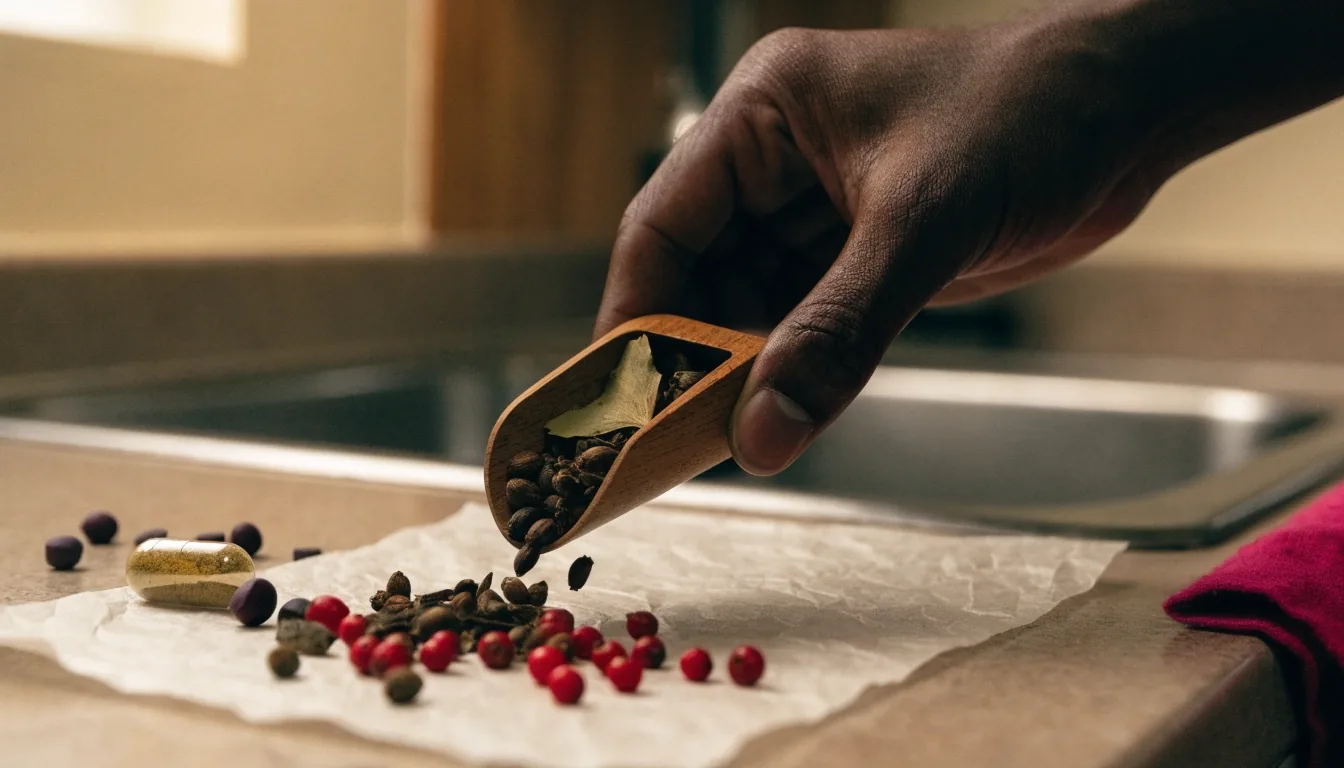
Herbal capsules
A shorter ingredient list than a multivitamin, and a different job on the shelf. Here is what the plant extracts on those labels usually are, and how a botanical capsule sits in a daily routine.
A herbal capsule is defined by its ingredient list rather than its format. The panel leads with plant extracts, and you will rarely see the full vitamin line a daily multi carries.
Saw palmetto, ginkgo biloba and grape seed extract are typical openers. Resveratrol, usually listed as trans-resveratrol, turns up in the more premium end of the shelf. What is missing is just as informative: there is no broad vitamin and mineral panel underneath, because the formula is not trying to be one.
That is a category choice rather than a flaw. Men who prefer to know exactly which plants they are taking often like these shorter panels, because every line on the label is something they can look up. Men who want nutritional coverage across the board usually want a multivitamin instead, and plenty of men take both — a daily multi in the morning, a botanical capsule at a different point in the day.
Reading the panel
Start at the ingredient list, not the front of the pack. Note the serving size, then the order of the extracts — the first two or three names tell you what the formula was actually built around.

Three names carry most of the weight in the imported formulas sold here. Each arrives with a different support cast on the label.
Common in Indonesian listings as part of a botanical complex rather than on its own. When it leads a panel, you are usually looking at a plant-extract formula, not a general daily vitamin.

Included in a number of men's health capsule formulas and sold well beyond men's products. Formulas that carry it often lean on circulation and focus in their wording — a positioning choice rather than something we would repeat as fact.

Usually listed as trans-resveratrol in imported formulas, and almost never alone. Grape seed extract and lycopene are the two companions that signal an antioxidant-heavy build.
If you see two of the three antioxidant ingredients on one panel, expect the third, and expect a longer list overall than a straightforward saw palmetto capsule. Want a second opinion on a specific label? Ask us a label question and we will walk through it with you.
Two jobs, one shelf
Mixing the two categories up causes most of the confusion at the shelf. They answer different questions, and the panel tells you which question you are holding.

A multivitamin is a natural supplement for men that covers vitamin and mineral intake across a broad panel, with ingredients such as zinc and magnesium doing the heavy lifting. A botanical capsule centres on plant extracts and does not attempt that coverage.
If your goal is filling gaps in what you eat, the multi is the right shelf. If your goal is a plant-focused formula you take consistently, the capsule is the right shelf. Some men take a daily multi in the morning and a botanical capsule at another time of day, which keeps the two roles distinct instead of blurring them into one purchase.
Quick check before you buy
Read the first three ingredients. Plant extract first means a botanical formula; a vitamin or mineral first means a multi.
Check the serving size against the pack count, so you know how long one bottle actually lasts at the label's direction.
Note whether the plant extract is the headline or part of a group. That tells you how the formula was built.
Look for the BPOM registration number on the pack — the practical legitimacy signal shoppers in Indonesia can verify.
Botanical capsules reward a steady routine more than a quick trial. Three things decide whether a pack makes sense for you.
Serving
Most herbal capsules ask for a fixed daily serving, usually one or two capsules. The ingredient list only makes sense at the direction on the pack, so check it before you plan anything else.
Consistency
Pick one capsule and take it at the same time each day. Do not stack three different botanical products hoping for a combined result — that just makes it impossible to know what you are responding to.
One review point
Our advice is deliberately unexciting: give a full pack before you form any opinion. One product, one routine, one review point — that is what makes the experiment readable.
Herbal products need the same label check as any other supplement sold in Indonesia. A vague panel is not proof of anything, but it is a reason to look at a different product before spending money.
Registration number
BPOM number printed on the pack
Verify before buying
Ingredient quantities
Milligrams per extract, not just names
Compare, don't assume
Serving size
Capsules per day versus capsules per pack
Maps to how long it lasts
Import detail
Imported panels tend to list more; local ones can be thinner
Detail is a buying signal
Storage and expiry
Dry, away from the Palembang heat and humidity
Keeps the panel honest
If you want a rule of thumb: a panel that names the extract but skips the amount, or lists a blend weight without a serving size, belongs on your lower shelf. A panel you can read without a magnifier is usually a panel that was written by someone who expected to be checked.
Men who already pay attention to what they eat often drift toward botanical formulas, because the ingredient story is shorter and easier to follow.
So do men who have tried a multivitamin and found the panel more than they wanted to read. Ginkgo, saw palmetto and resveratrol formulas suit that buyer: they are plant-first, they carry a clear reason to be in the routine, and they do not pretend to cover nutrition on their own.
If you are new to supplements entirely, a daily multi is usually the simpler starting point — it is a natural supplement for men built around broad coverage, and it is easier to judge. Add a botanical capsule later, once the habit of taking something daily is already set. That sequence matters more than which brand you choose first, and it also makes each product far easier to evaluate on its own.
Where to go next
Five things visitors ask us most often about plant-based formulas and how they sit alongside vitamins and minerals for men.
Many men do, and it is the arrangement we describe most often: a daily multi in the morning for broad vitamin and mineral coverage, a botanical capsule at another point in the day. They are not competing for the same job. If you take a multivitamin that already includes a plant extract you are also buying separately, check the two panels together before you double up.
We deliberately avoid promising a timeline. What we suggest instead is a clean trial: one product, the label's serving, the same time each day, and a full pack before you form a view. That gives you an actual comparison point. Changing products every two weeks removes the only variable that mattered.
Not by itself. Imported formulas tend to print more detail on the panel — extract quantities, the trans-resveratrol form, the supporting plant compounds — and that extra information is genuinely useful when you compare. Some local products state less. Either way, the BPOM registration number and the ingredient quantities are what you check, not the country on the label.
It is a naming convention on imported retail descriptions, and it is a useful signal rather than a mystery. Formulas written that way usually belong to the antioxidant-heavy style, which means you should also expect grape seed extract and lycopene on the same panel, and a longer ingredient list than a simple plant capsule.
Not necessarily, and we would not push one. Botanical capsules suit men who want a plant-focused addition they take consistently, and who like a short ingredient list they can follow. Others prefer to put their attention into food and skip the capsule entirely. If you take any supplement alongside prescribed medication, or you have an ongoing health condition, talk to a qualified professional before you start.
Send us the ingredient list you are looking at, or drop by the shop and we will read the panel with you. HerbalPria is an educational resource and catalogue for natural men's health supplements in Indonesia — we help you compare, not decide for you.